
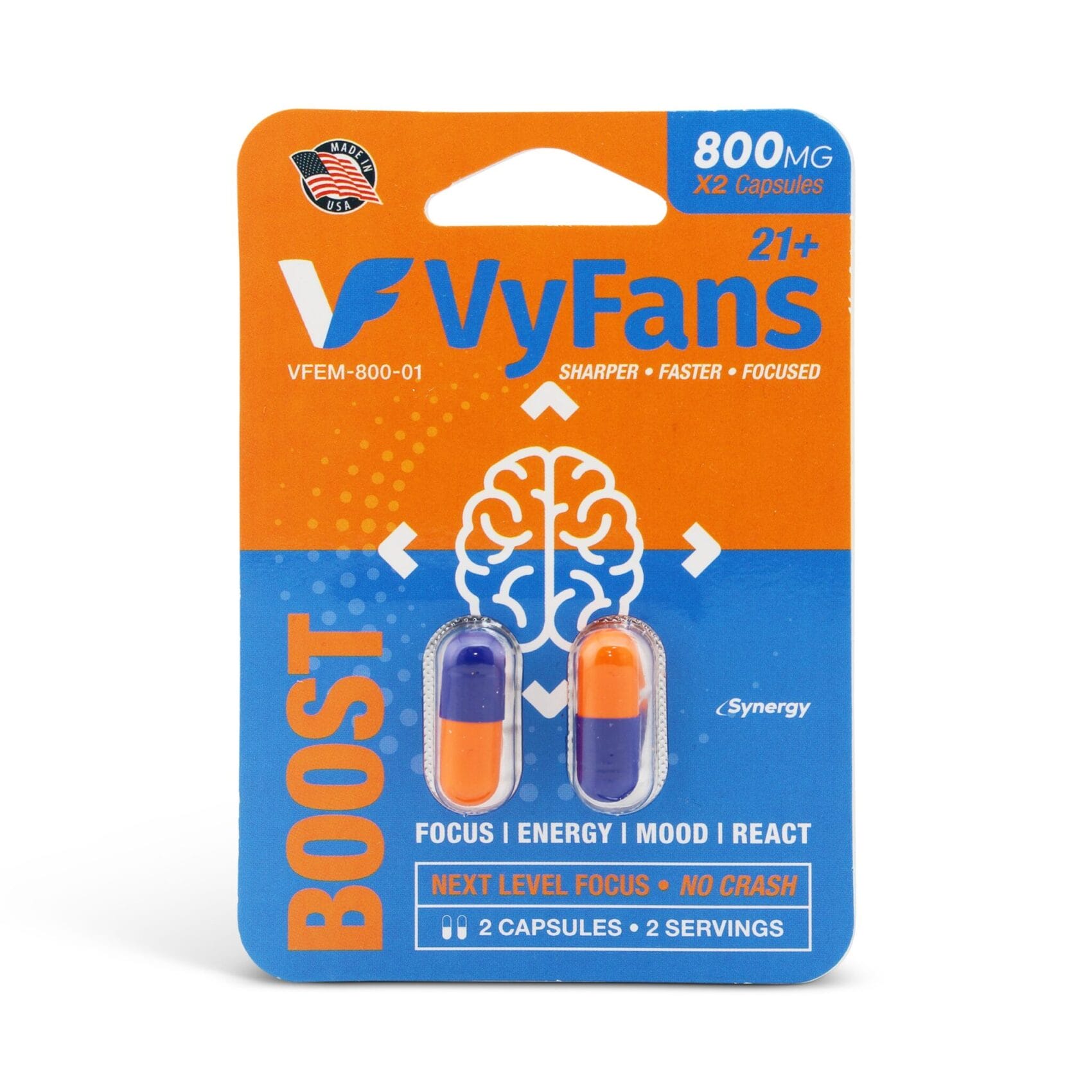
Vyfans Capsules, 800mg x 2ct
$4.89
You save (%)
Shipping: Orders over $49 ship FREE
Free Standard Shipping – orders over $49 Free USPS Priority shipping – orders over $100
VyFans Boost is a high-stimulant DMHA-based nootropic formulated for adults who already tolerate strong pre-workouts or focus enhancers and want an aggressive, capsule-based Adderall-style alternative without a prescription. It combines DMHA, phenethylamine (PEA), and GABA in an 800mg proprietary blend to target focus, energy, mood, and reaction time—while carrying serious safety and regulatory caveats you should understand before use.
What VyFans Boost is and how it works
VyFans Boost is marketed as an “Adderall alternative” nootropic built around 2-amino-6-methylheptane (DMHA), a synthetic stimulant structurally similar to DMAA and sometimes called octodrine. Each 2‑capsule pack provides:
- Total proprietary blend per pack: 800mg (2 servings)
- Serving size: 1 capsule (400mg blend per serving)
- Servings per pack: 2
The proprietary blend includes:
- DMHA (2-amino-6-methylheptane): Potent central stimulant used in some pre-workouts and fat burners to increase energy, focus, and perceived well‑being by boosting dopamine and norepinephrine and acting as a monoamine‑releasing agent.
- 1-amino-2-phenylethane (Phenethylamine / PEA): A fast-acting neuromodulator often linked to mood, motivation, and “euphoric drive,” though it’s rapidly broken down in the body unless combined with other agents.
- Gamma-Aminobutyric Acid (GABA): An inhibitory neurotransmitter included to blunt excessive stimulation, aiming to provide smoother focus and reduce harsh jitters or crash.
This combination is typical of “hardcore” DMHA stacks that try to layer stimulation (DMHA, PEA) with a calming element (GABA) to create a focused, wired-but-not-overly-anxious feel.
How it’s positioned vs Adderall and other nootropics
Marketing frames VyFans Boost as a non-prescription alternative to Adderall/Vyvanse for focus, energy, and productivity, while remaining a supplement rather than a scheduled medication. It’s promoted for:
- FOCUS: Laser-like concentration for work, study, or gaming
- ENERGY: Strong, long-lasting stimulation
- MOOD: Elevated, driven, “on-task” mindset
- REACT: Faster reaction times and alertness
Compared to softer stacks (like caffeine + L‑theanine or choline-based nootropics), DMHA products are explicitly marketed for intense, stimulant-driven performance and are generally recommended only for stimulant-tolerant adults.
That said, it’s critical to understand:
- Adderall and Vyvanse are prescription amphetamines with clinical data and medical oversight.
- VyFans Boost is an unapproved supplement containing DMHA, which the FDA classifies as an unsafe food additive; supplements with DMHA are considered adulterated under U.S. law.
Dosing, timing, and who it’s (theoretically) for
Typical product directions (and best practice with DMHA) emphasize conservative use:
- Serving: 1 capsule with food
- Max per 24 hours: Do not exceed 2 capsules (full pack)
- Start low: Most users are advised to start with 1 capsule to assess tolerance
- Onset: DMHA effects often start 15–60 minutes after ingestion and can last several hours due to prolonged catecholamine activity.
This kind of product is targeted at:
- Adults 21+ with existing tolerance to strong stimulants
- People using it occasionally for high-demand days (big exams, long shifts, competitive gaming, intense workouts) rather than daily use
Daily or frequent intake meaningfully increases risks of cardiovascular strain, anxiety, sleep disruption, and psychological dependence.
Serious safety and legal concerns
You should treat VyFans Boost as a high-risk experimental stimulant, not a benign focus pill:
- DMHA is not legal as a dietary ingredient. The FDA considers DMHA not a lawful dietary ingredient and an unsafe food additive; supplements containing it are officially adulterated.
- Cardiovascular strain: DMHA can raise heart rate and blood pressure and has been linked to stimulation phases followed by post-stimulation side effects and sleep disturbance.
- Potential side effects: Elevated heart rate, hypertension, anxiety, tremors, nausea, appetite suppression, insomnia, and post-use “crash” are all reported with strong DMHA products.
- High-risk groups: Strongly discouraged in anyone who is:
- Under 21
- Pregnant or nursing
- Living with heart disease, high blood pressure, diabetes, seizure history, prostate issues, or psychiatric conditions
- Taking MAOIs, antidepressants, other stimulants, or drugs that affect blood pressure or heart rhythm
- Driving/operating machinery: Should not be used before driving or performing safety‑critical tasks due to the risk of overstimulation, anxiety, or rebound fatigue.
- Not for ADHD treatment: Despite “Adderall alternative” marketing, VyFans Boost is not FDA-approved to diagnose, treat, or manage ADHD or any medical condition, and safety/efficacy data for long-term cognitive use are lacking.
Practical advice if someone still chooses to use it
If an adult who understands the risks still decides to experiment with VyFans Boost or similar DMHA stacks, harm-reduction basics include:
- Talk to a doctor first, especially if you have any cardiovascular, neurological, or psychiatric history, or take medications.
- Start with the minimum (1 capsule) and never exceed 2 capsules in 24 hours.
- Avoid stacking with caffeine, pre-workouts, fat burners, or other stimulants.
- Do not use daily; keep it to rare, high-demand occasions to reduce tolerance and dependency risk.
- Stay hydrated and monitor your body: palpitations, chest pain, severe anxiety, shortness of breath, or neurological symptoms are red flags—seek immediate medical care.
- Stop immediately if you notice worsening mood, sleep, or reliance on the product just to feel “normal.”
VyFans Boost sits at the “hardcore” end of the nootropic spectrum: strong, very much not benign, and in a regulatory gray area where the core ingredient (DMHA) is considered unsafe by the FDA. For most people seeking focus support, evidence‑based, physician‑guided options—or milder, legal nootropic strategies—are far safer choices.
Related products
